

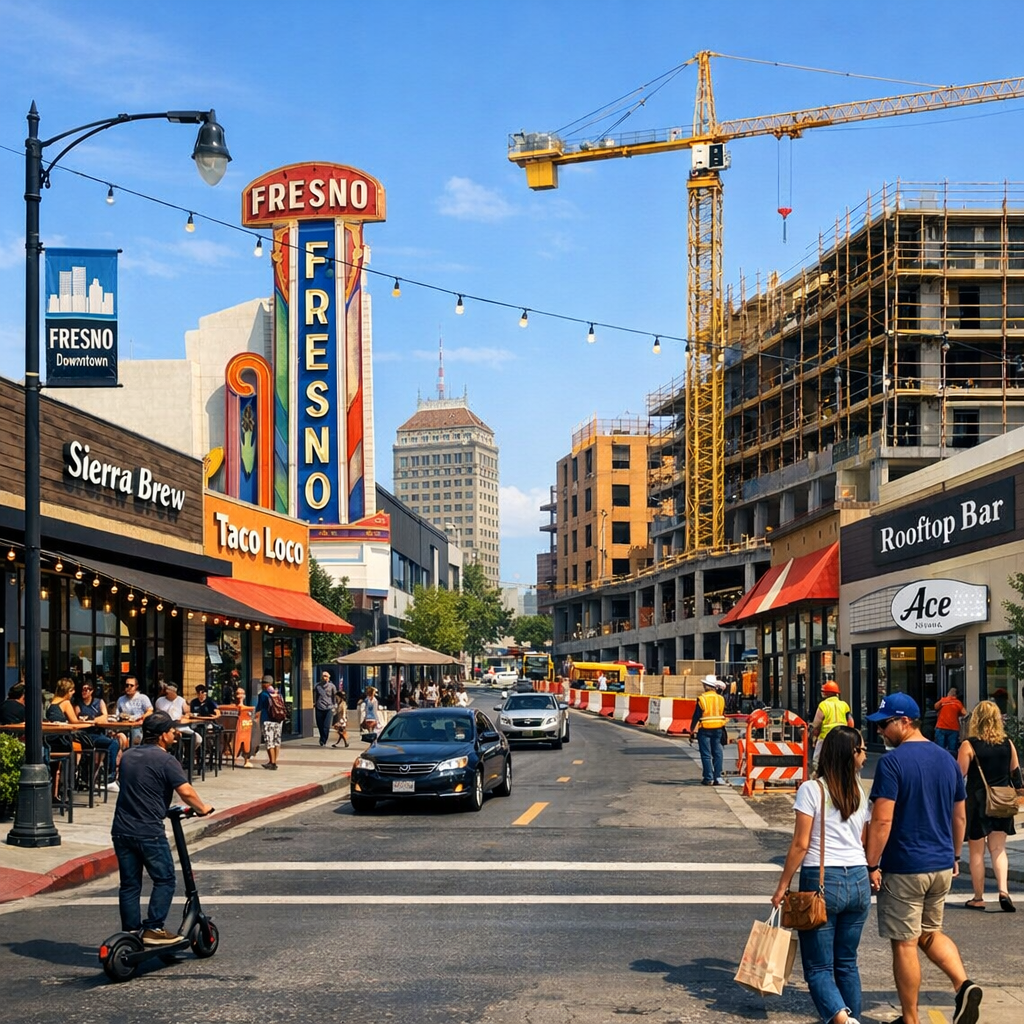
Fresno’s business environment is experiencing significant transformations, marked by new ventures, economic shifts, and ongoing challenges. This article delves into recent developments shaping the local economy.
New Ventures and Expansions
Several businesses have recently set roots in Fresno, contributing to the city’s economic vitality. Notably, The Wickersham Company, Fresno’s sole official Rolex dealer, relocated to the Park Place shopping center, expanding its showroom from 2,500 to 7,500 square feet. This move underscores a commitment to the local market and reflects confidence in Fresno’s retail sector.
In the same vein, Fresh Monkee, a health-focused protein shake shop, opened its doors at Park Place, catering to the growing demand for nutritious dining options among residents.
Major Investments in Manufacturing
Coast Aluminum has embarked on constructing a 163,000-square-foot manufacturing and distribution facility near Peach and McKinley Avenues. This $42 million project is anticipated to create approximately 100 new jobs, bolstering Fresno’s manufacturing sector and providing substantial employment opportunities for the community.
Economic Indicators and Housing Market
According to the U.S. Bureau of Labor Statistics, as of March 2026, Fresno’s unemployment rate stood at 8.9%, reflecting a slight increase from previous months. The labor force comprised 547,900 individuals, with 499,000 employed, indicating a resilient job market despite minor fluctuations.
The housing market remains active, with a median listing price of $425,000 and a median rent of $1,600 per month. Year-over-year, home prices have risen by 1.19%, suggesting steady demand and a stable real estate environment.
Challenges and Community Concerns
Despite positive developments, Fresno faces challenges, particularly in housing affordability. A significant portion of residents allocate more than half their income to rent, highlighting the need for affordable housing solutions. Additionally, ongoing construction projects, such as the High-Speed Rail, have impacted local businesses, necessitating adaptive strategies to maintain operations during periods of disruption.
Conclusion
Fresno’s business landscape is marked by dynamic growth and resilience. While new ventures and investments signal economic vitality, addressing challenges like housing affordability and supporting businesses through infrastructural changes remain crucial for sustained prosperity. The community’s adaptability and proactive measures will be key in navigating these evolving economic dynamics.