

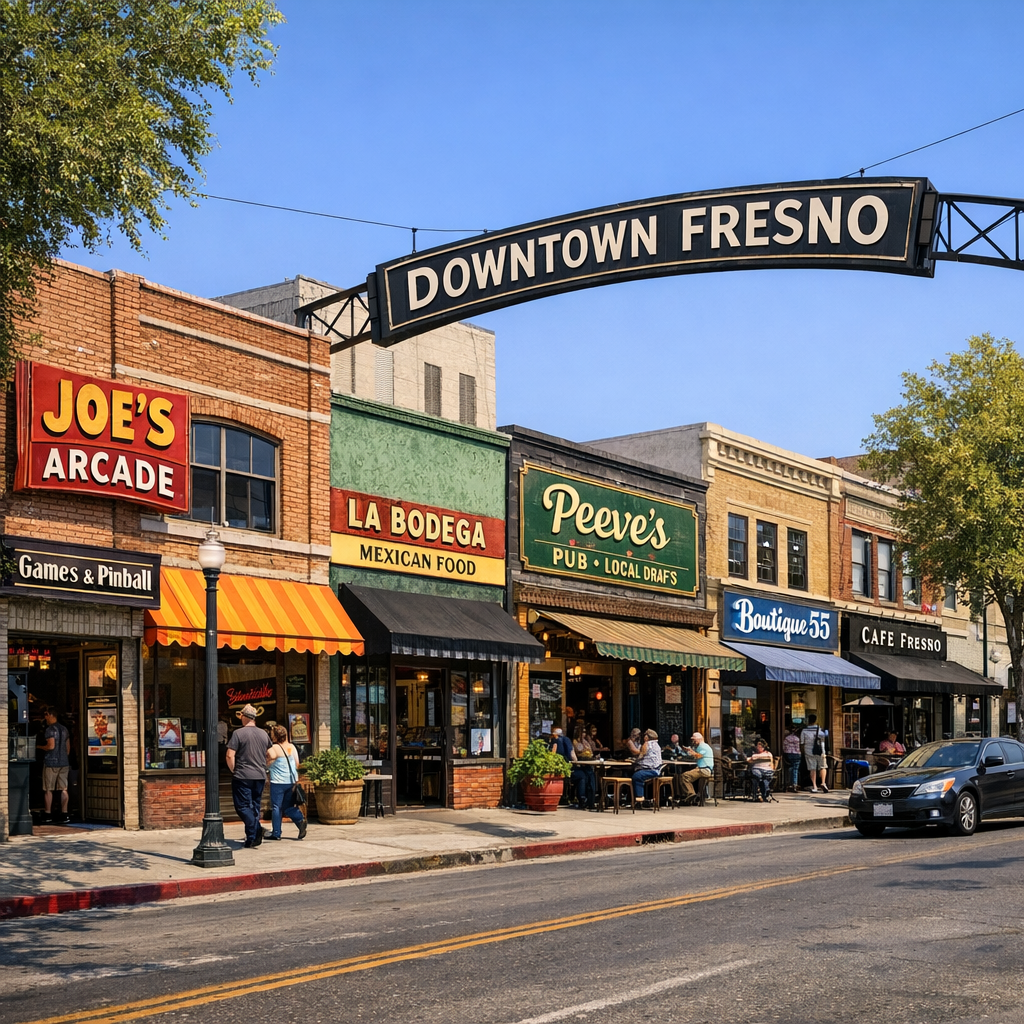
Local Growth Engine: Fresno’s Evolving Economy
Economic figures show steady but uneven progress across Fresno’s job sectors. In recent months the unemployment rate has dropped into the 7% range, with employment rising even as certain sectors like financial activities face headwinds, and health care and education continuing to add jobs. Nonfarm employment has climbed slightly year over year in many core industries within the Fresno metro area. These patterns reflect both local challenges and potential for growth.
One notable dynamic is Fresno’s occupational structure. Jobs in healthcare support, transportation, life, physical, and social sciences are growing in prominence. At the same time, Fresno’s average wages remain below national levels in many fields—even while roles in management, law, and healthcare practitioners offer above-average pay locally.
Supporting Small Businesses & Inclusivity
Fresno is leaning into small business and startup support as foundational to future growth. Scale Fresno, launched with backing from philanthropic and community partners, intends to increase small business ownership by about 30% by the end of this decade—aiming for nearly 7,000 new businesses.
Efforts by city and county agencies complement that goal through technical assistance, financing referrals, and programs like “First-Stop for Startups” that streamline processes such as permitting and site selection. Small business loans, workforce training, and food sector-focused funds like SIEMBRA and Hecho en Fresno are helping address gaps in capital and market access.
The Role of South Central Fresno & Economic Centers
One concentrated area of economic output is South Central Fresno. Though it covers less than 8% of Fresno’s land, this business district supports hundreds of businesses across more than 120 sectors, contributing a large share of city revenue and creating jobs both locally and citywide.
Fresno’s “Economic Centers” reinforce this concentration—zones where infrastructure investment, development incentives, and private-public partnerships aim to accelerate growth. Through targeted improvements and better resource access, these centers are helping to distribute business opportunity beyond traditional commercial corridors.
Opportunities & Challenges Ahead
Challenges remain. Certain sectors haven’t kept pace with wage growth or expansion. The pipeline of skilled talent is under pressure, with underinvestment in education, workforce regulation hurdles, and inequities in access to capital disproportionately affecting immigrant entrepreneurs and communities of color.
But there are also strong reasons for optimism. Fresno benefits from a favorable cost of living compared to many California metros, strong agricultural linkages, and growing investment in infrastructure and innovation. The city is positioning to harness these strengths through inclusive policies—efforts aimed at strengthening neighborhoods, improving broadband access, and expanding resident participation in economic gains.
What Entrepreneurs Should Know
- Explore local incentive programs—tax credits, reduced utility rates, or wage reimbursements—that could reduce startup costs.
- Connect with resource hubs like small business development centers or mentorship networks to navigate licensing, permitting, and funding.
- Consider locating in or near Economic Centers to benefit from infrastructure investments and easier access to customers or supply chains.
- Invest in workforce development or training—both for your team and for yourself—to keep pace with changing regulations, market needs, and technology.